
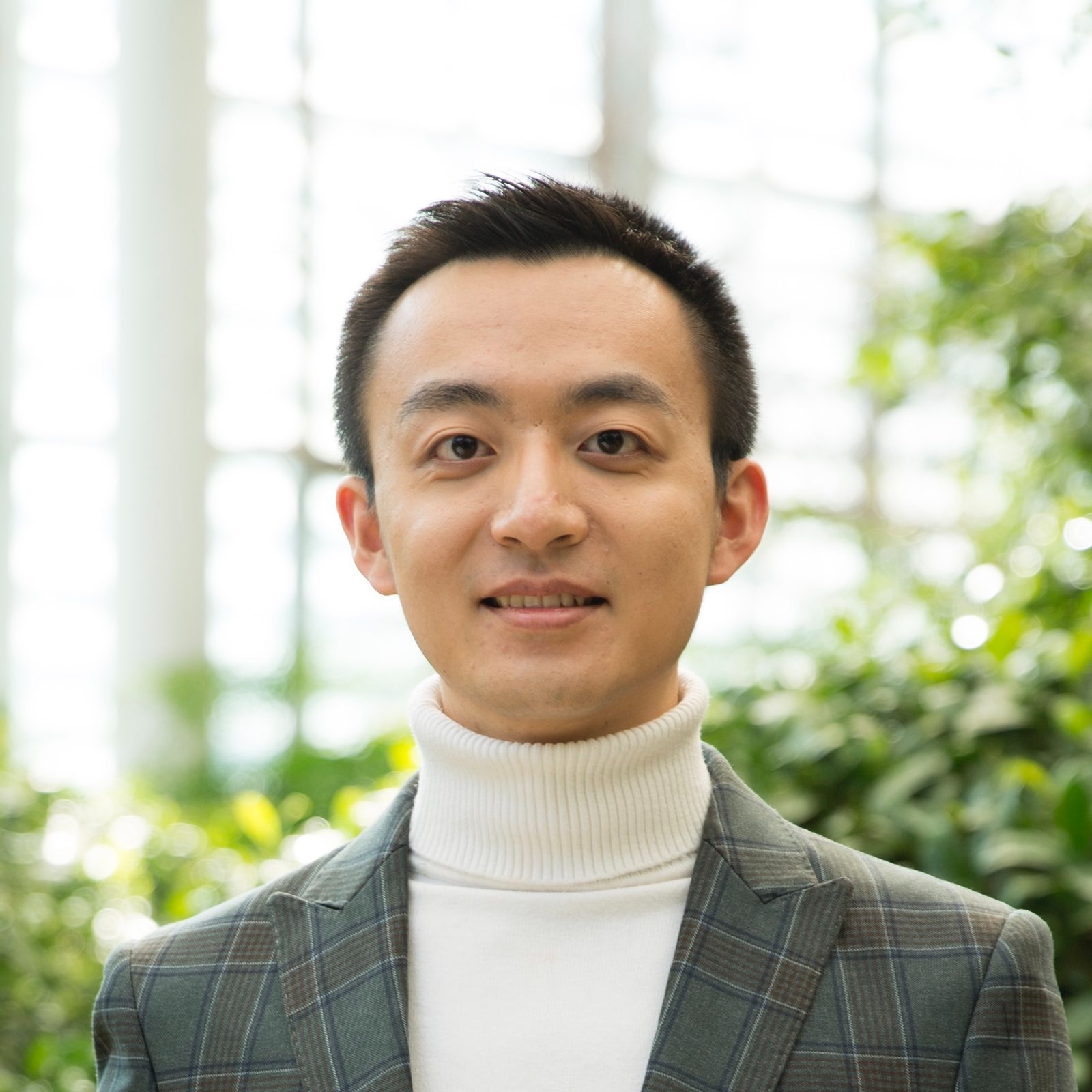
Yuntian Deng
- Assistant Professor, UWaterloo
- Associate, Harvard SEAS
- Faculty Affiliate, Vector Institute
- PhD in CS, Harvard
My research in natural language processing and machine learning explores how neural models can learn computations that would otherwise be expressed through symbolic programs or explicit reasoning steps. My group develops methods for compiling natural-language function specifications into reusable neural programs (ProgramAsWeights), simulating interactive computing environments with generative models (NeuralOS), and internalizing reasoning through implicit chain of thought. I also study how people use language models in the wild through large-scale conversation datasets and open analysis tools, including WildChat and WildVis.
I build open-source systems and interactive demos that make these ideas concrete and let others explore, evaluate, and build on them. Our WildChat dataset has been used by OpenAI and Anthropic for model safety evaluation, and I co-developed OpenNMT, an open-source neural machine translation toolkit widely used in research and industry. I received my PhD from Harvard University, advised by Alexander Rush and Stuart Shieber, and was a postdoctoral researcher with Yejin Choi at the Allen Institute for AI.
I believe pretraining models to compile repeated tasks into small, reusable neural programs - instead of always solving problems from scratch - is one of the most exciting future directions in AI.
Read the full article: From AI as Problem Solver to AI as Tool Builder
Research Themes
ProgramAsWeights (PAW)
A new programming paradigm that replaces symbolic code for fuzzy functions with compiled neural programs. Towards programming without code as an intermediary.
programasweights.com · Research · Reading listNeural World Models
Can generative models learn the behavior of interactive computing environments? We explore this through NeuralOS, which uses a neural generative model to simulate an operating system end to end.
NeuralOS · Reading listImplicit Chain of Thought
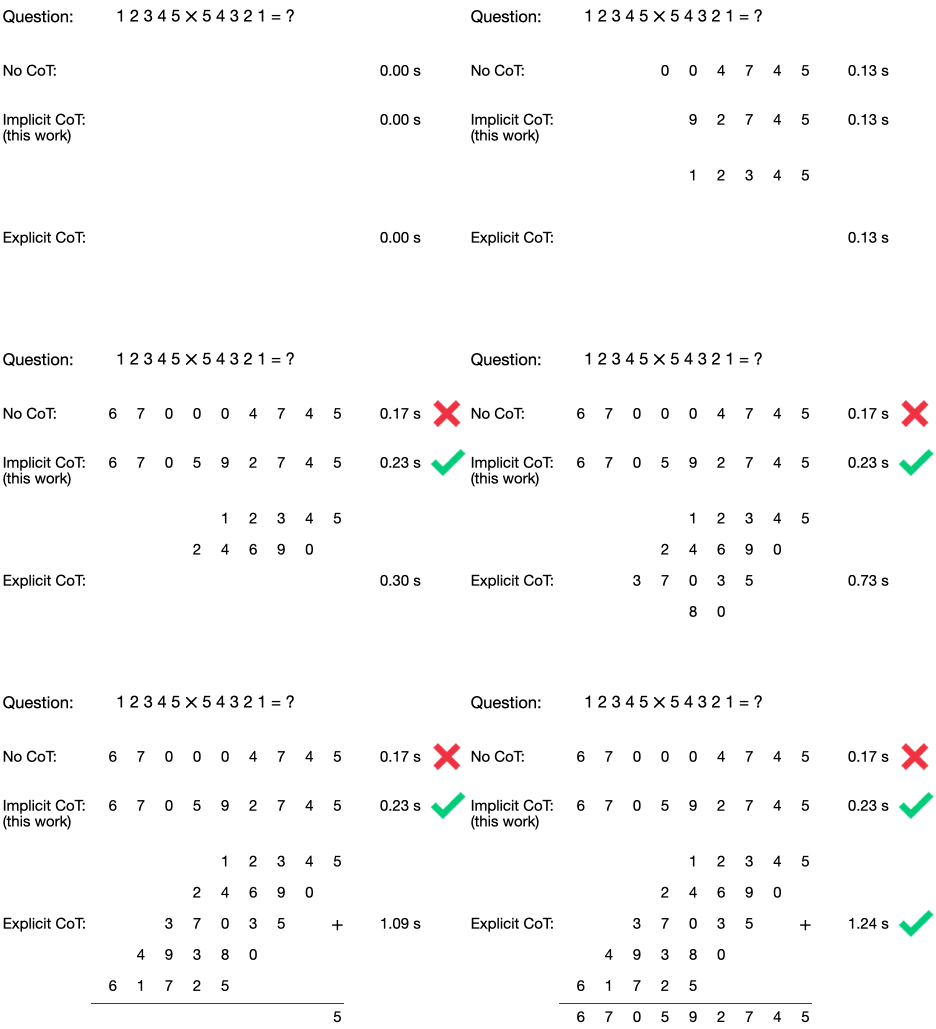
We first proposed implicit chain-of-thought reasoning (also called latent reasoning) in 2023: using continuous hidden states instead of writing out intermediate steps. Our work includes knowledge distillation and step-by-step internalization.
2023 paper · 2024 paper · Demo · Reading list · ICLR 2026 workshopLLM Usage at Scale
How do people actually use large language models? We collect and analyze millions of real-world conversations to understand usage patterns, safety, and emergent behaviors.
WildChat · AI Observatory · WildVisIn the Media
Interviews, Features, and Expert Commentary
Coverage of Coauthored Research
University Q&As and Profiles
Selected Recognition
- Laude Institute Slingshots (NeuralOS)
- Google Research Award (co-PI)
- ACM Gordon Bell Special Prize for COVID-19 Research
- NVIDIA Fellowship
- DAC 2020 Best Paper Award
News
- : The implicit chain-of-thought reading list brings together papers organized by approach, explanations, demos, and downloadable citations.
- : Our paper, Program-as-Weights: A Programming Paradigm for Fuzzy Functions, has been accepted to NeurIPS 2026!
- : Quoted in Science News on reasoning without words and the efficiency and interpretability of AI models.
- : Discussed Claudish, how coding agents are influencing human language, and our ProgramAsWeights translator in a University of Waterloo expert Q&A.
- : Interviewed by Taylor Lorenz for her User Mag article, "Vibe Coders Now Have Their Own Language," about English ↔ Claudish, how coding agents are shaping software developers' language, and whether humans are adapting to machine-generated dialects.
- : Built English ↔ Claudish, a bidirectional translator implemented as two local neural programs compiled with ProgramAsWeights. The launch post reached 1 million+ views and 17,000+ likes. Code.
- : Our team launched the AI Observatory, an independent public resource for measuring real-world AI use, with a feature on The Washington Post homepage and a long-form article in MIT Technology Review. The Technology Review article highlights WildChat as one of the Observatory's largest and most detailed datasets.
- : Wrote an article, "From AI as Problem Solver to AI as Tool Builder", on my view that pretraining models to compile repeated tasks into small reusable neural programs (ProgramAsWeights) is one of the most exciting future directions in AI.
- : Built a 3D character you can control with language instead of predefined buttons - a ProgramAsWeights neural program turns instructions like "act excited, wave, dance, then sit proudly" into movements.
- : Built an "Ask me anything" website helper powered by ProgramAsWeights, using its new Finetune compiler that trades compile time for accuracy (synthesizes ~3.6K examples and finetunes in about a minute).
- : Organizing the Latent & Implicit Thinking - Going Beyond CoT Reasoning Workshop at ICLR 2026.
- : My PhD student Wentao Zhang was selected as one of two University of Waterloo nominees advancing to the proposal round of the 2026 Qualcomm Innovation Fellowship.
- : Became Co-Chief Technical Officer (Co-CTO) for ACL Rolling Review (ARR).
- : Featured in a Canadian Press article about developing a tool to help courts spot AI-generated evidence.
- : Released WildChat-4.8M-Full, a dataset of 4.8M real user-ChatGPT conversations collected from our public chatbots (o1-preview and o1-mini).
- : We built a demo, NeuralOS, an operating system entirely powered by neural networks. Check out our paper for more details!
- : Featured in an NZZ article about WildChat.
- : Gave a talk at NYU CILVR on implicit chain of thought reasoning.
- : Interviewed by TechCrunch to discuss the challenges of using LLMs to solve basic math problems.
- : WildChat was featured in the Washington Post! This work collected 1M real-world user-ChatGPT conversations. You can explore all data at wildvisualizer.com, or try our data-collecting chatbot at huggingface.co/spaces/yuntian-deng/ChatGPT4.
- : I built a demo using GPT-2 to directly produce the product of two numbers without chain-of-thought (CoT). CoT is internalized using the approach in From Explicit CoT to Implicit CoT: Learning to Internalize CoT Step by Step. A 12-layer GPT-2 can solve 20-digit multiplication with 99.5% accuracy!
- : I built a demo to solve grade school math problems (GSM8K) without chain-of-thought (CoT) at 52% accuracy. CoT is internalized using the approach in From Explicit CoT to Implicit CoT: Learning to Internalize CoT Step by Step.
- : I built a website, wildvisualizer.com, for interactive search of WildChat, allowing keyword, toxicity, IP, language, and country-based searches of 1M WildChat conversations.
- : Our paper, From Explicit CoT to Implicit CoT: Learning to Internalize CoT Step by Step, is now publicly available! This paper proposes a simple yet effective method to teach language models to internalize chain-of-thought reasoning by gradually removing intermediate steps and finetuning.
- : I built a demo, AKSelectionPredictor, to predict whether a paper will be selected by @_akhaliq into Hugging Face papers based on its title, abstract, and authors.
- : Our dataset, WildChat, is used in Anthropic's Claude 3 for evaluating refusals.
- : Our dataset, WildChat, is now publicly available! It is a corpus of 650K real-world user-ChatGPT interactions, characterized by over 60 languages and a diversity of user prompts.
- : Our paper, Implicit Chain of Thought Reasoning via Knowledge Distillation, is now publicly available! This paper trains LMs that can reason internally using hidden states instead of articulating all reasoning steps like humans.
- : OpenAIWatch.com is launched! It tracks GPT-4's nondeterministic behavior even with greedy decoding in unicorn illustrations. 🦄
- : Our GPT Chatbot, based on Yuvraj Sharma's code, is now live! It provides free access to GPT with the aim of collecting dialogue data for research purposes.
- : Our paper, Model Criticism for Long-Form Text Generation, is now publicly available! This paper uses model criticism in latent space to quantify various notions of high-level coherence in long-form text generation.
- : Markup-to-Image Diffusion Models demo is now live! This project uses a diffusion model to learn how to render various types of markups, including LaTeX.
- : Our paper, Cascaded Text Generation with Markov Transformers, is available! It allows parallel, fast, autoregressive, and accurate text generation using a high-order Markov model.
- : Introducing Residual Energy-Based Models for Text Generation, a globally-normalized approach to text generation! Our approach uses a global discriminator to guide the traditional locally-normalized language model to produce text that's more indistinguishable from human-written text.
- : Neural Linguistic Steganography demo is now live! This project lets you hide secret messages in natural language using arithmetic coding.
- : Excited to introduce OpenNMT, an open-source neural machine translation toolkit developed for industrial and academic use.
- : Excited to announce that we've provided a solution to OpenAI's requests-for-research im2latex challenge using neural sequence-to-sequence learning! Check out the visualizations here.

Current Research

Wentao Zhang*, Liliana Hotsko*, Woojeong Kim*, Pengyu Nie, Stuart Shieber, Yuntian Deng.
NeurIPS 2026

Luke Rivard, Sun Sun, Hongyu Guo, Wenhu Chen, Yuntian Deng.
ICLR 2026

Yuntian Deng, Yejin Choi, Stuart Shieber.
arXiv 2024 PDF HTML
Yuntian Deng, Kiran Prasad, Roland Fernandez, Paul Smolensky, Vishrav Chaudhary, Stuart Shieber.
arXiv 2023 PDF HTML

Wenting Zhao, Xiang Ren, Jack Hessel, Claire Cardie, Yejin Choi, Yuntian Deng.
ICLR 2024 (Spotlight) PDF
Featured in the Washington Post
Used in OpenAI's o1 for safety evaluation
Used in Anthropic's Claude 3 for evaluating refusals
Other Selected Works
For all my papers, visit the publications page or my Google Scholar.

Wentao Zhang, Yang Young Lu, Yuntian Deng.
EMNLP 2025 Demo PDF

Yuntian Deng, Wenting Zhao, Jack Hessel, Xiang Ren, Claire Cardie, Yejin Choi.
EMNLP 2024 Demo PDF
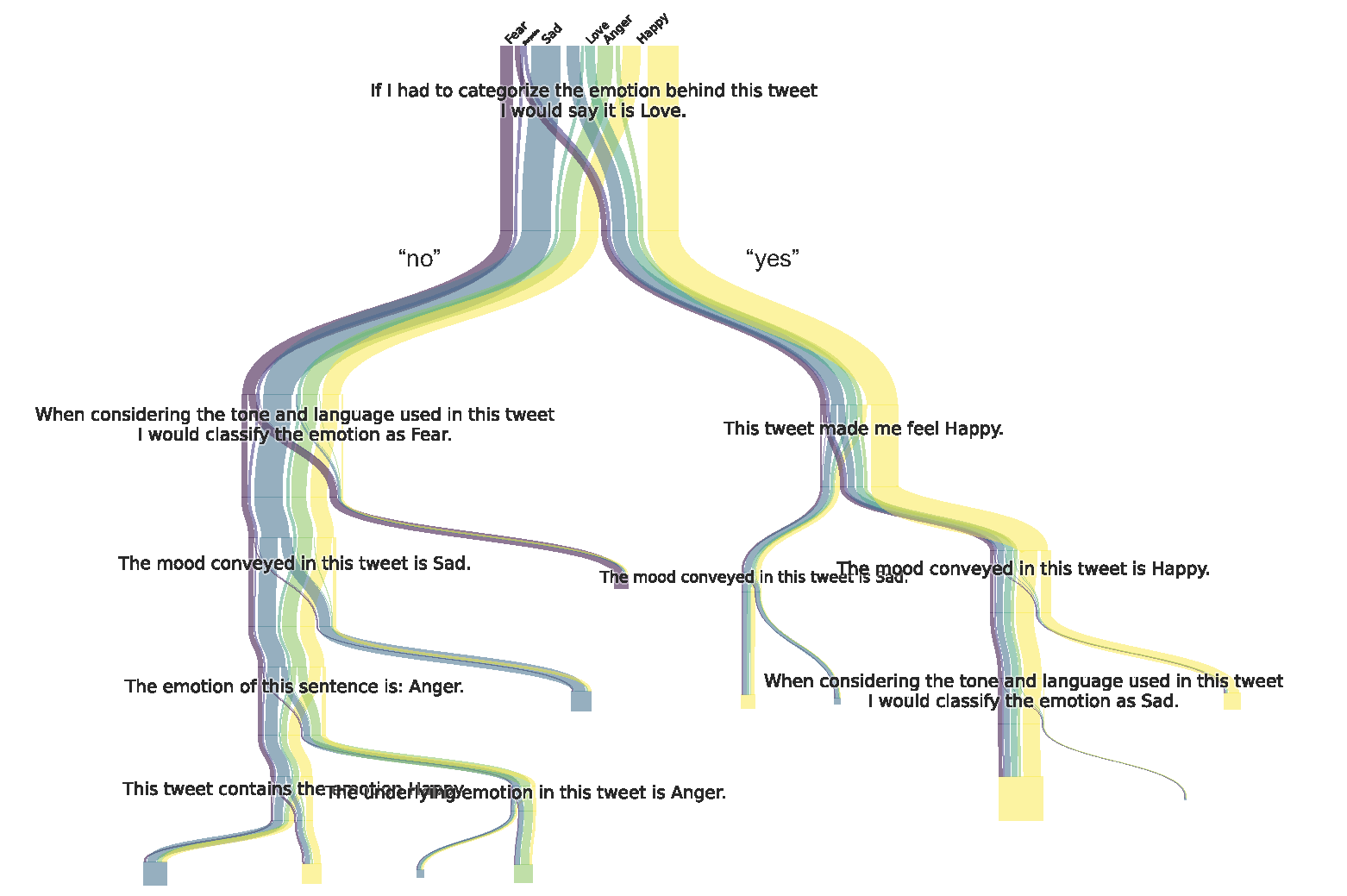
John Xavier Morris*, Chandan Singh*, Alexander M. Rush, Jianfeng Gao, Yuntian Deng.
EMNLP 2023

Yuntian Deng, Noriyuki Kojima, Alexander M. Rush.
ICLR 2023

Yuntian Deng, Volodymyr Kuleshov, Alexander M Rush.
EMNLP 2022

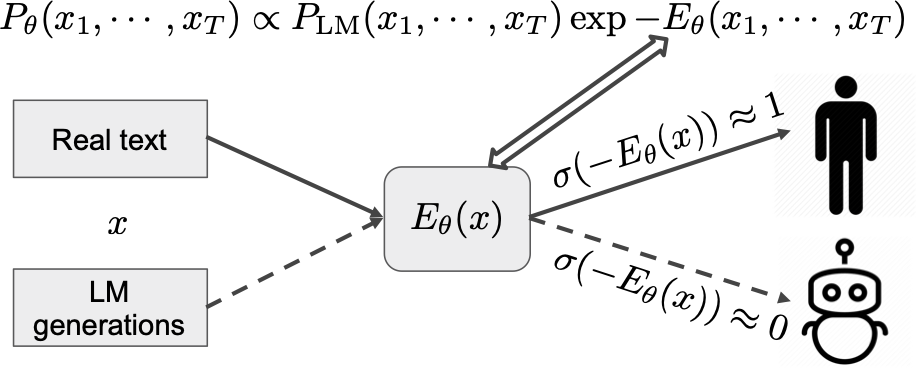
Yuntian Deng, Anton Bakhtin, Myle Ott, Arthur Szlam, Marc'Aurelio Ranzato.
ICLR 2020
Referenced by Meta's Llama 2
Referenced by the diffusion paper (DDPM)
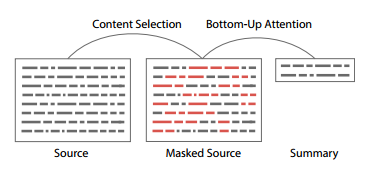
Sebastian Gehrmann, Yuntian Deng, Alexander Rush.
EMNLP 2018 PDF
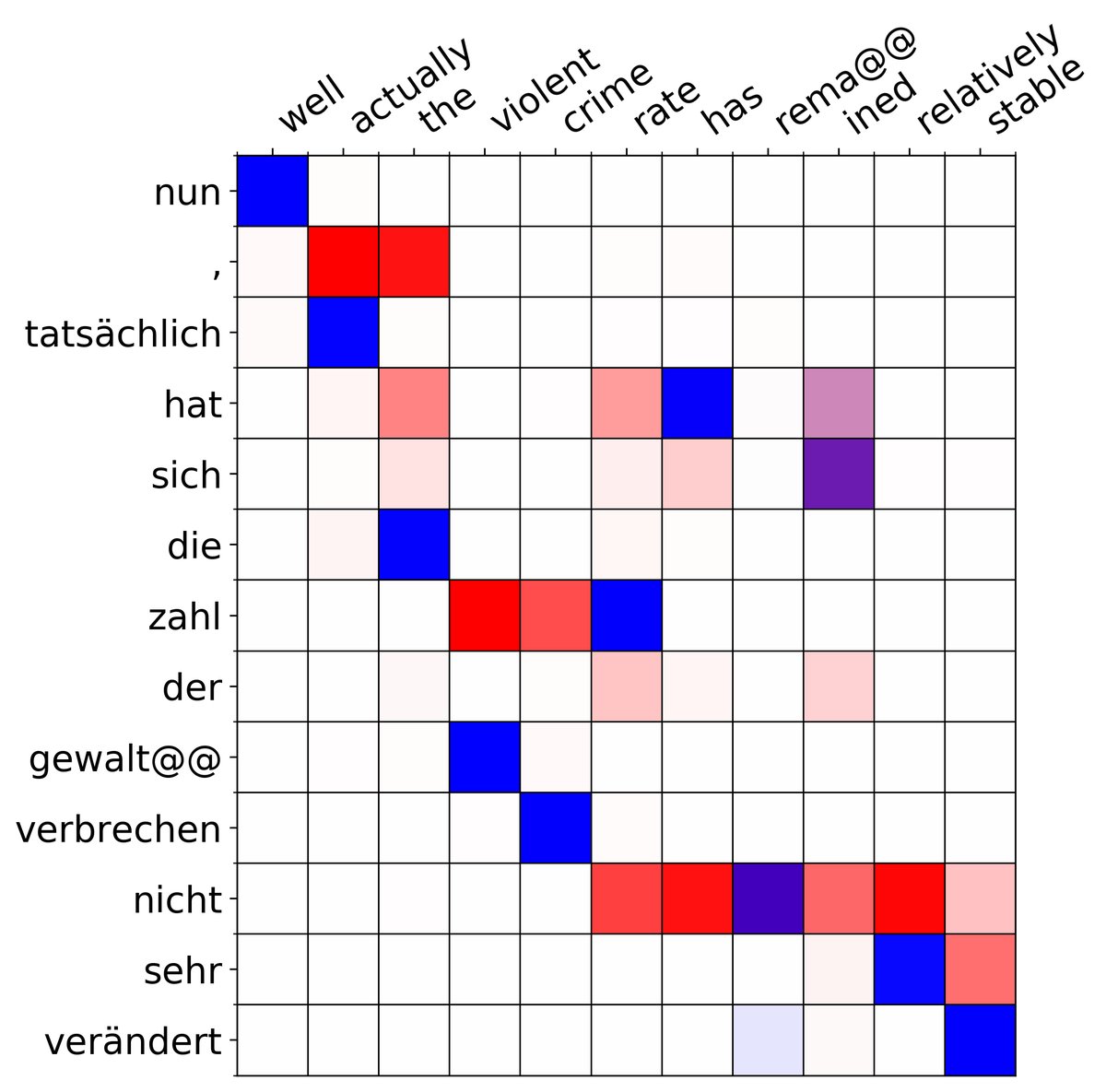
Yuntian Deng*, Yoon Kim*, Justin Chiu, Demi Guo, Alexander M. Rush.
NeurIPS 2018

Yuntian Deng, Anssi Kanervisto, Jeffrey Ling, and Alexander M. Rush.
ICML 2017
Our 2016–2017 Image-to-Markup research introduced IM2LATEX-100K (im2latex), a dataset pairing mathematical-expression images with LaTeX source. Project · Dataset & attribution · Citation
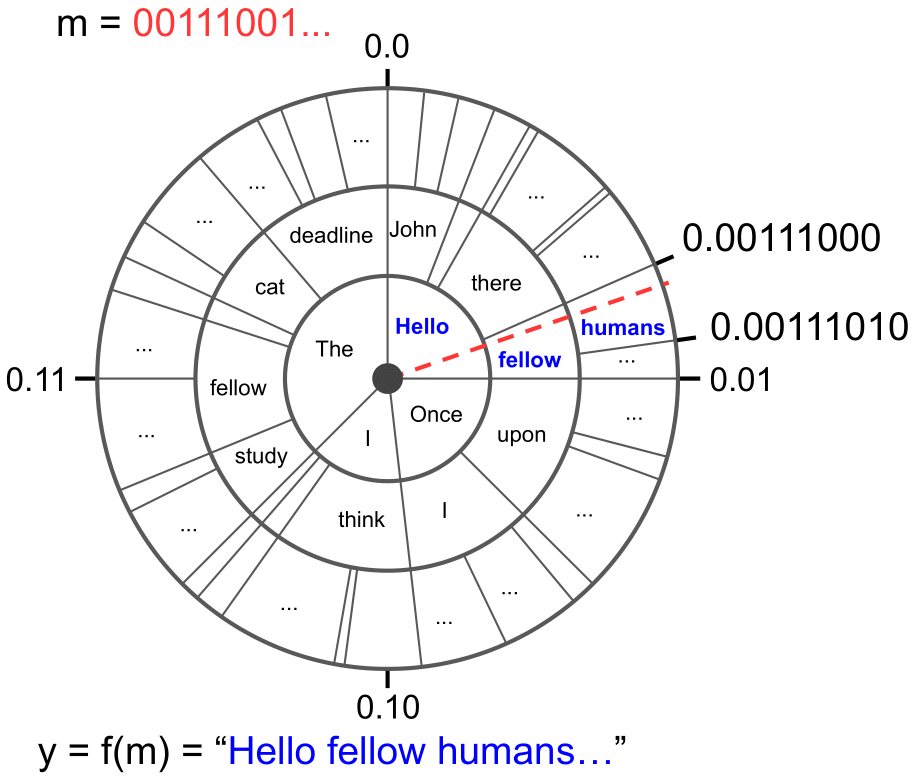
Zachary Ziegler*, Yuntian Deng*, Alexander Rush.
EMNLP 2019 (Oral) reading list
Guillaume Klein, Yoon Kim, Yuntian Deng, Jean Senellart, Alexander M. Rush.
ACL 2017 Demo (Best Demonstration Paper Runner-Up)
Leadership and Service
- Co-Chief Technical Officer, ACL Rolling Review (ARR), 2025–present
I co-lead technical infrastructure and review operations across successive ARR cycles, including paper matching, contributor qualification, and workflow reliability. ARR received 17,087 submissions in the May 2026 cycle alone.
- Action Editor, TACL, 2025–present
- Co-Chair, AAAI-27 Undergraduate Consortium, 2027
- Workshop Organizer, Latent & Implicit Thinking Workshop, ICLR 2026
- Mentor Chair, ICLR 2026
Prospective Students
If you are interested in joining my group, please first read ProgramAsWeights (PAW), NeuralOS, and our work on implicit chain-of-thought reasoning (internalization; knowledge distillation). When reaching out, briefly explain which research direction interests you. Due to high volume, I am unable to respond to generic inquiries.